Rooflifter At A Glance
What is a Rooflifter?
A roof lifter enhances warehouse space by
raising the existing roof, enabling greater vertical clearance for taller storage or improved access.
This process involves several key steps.
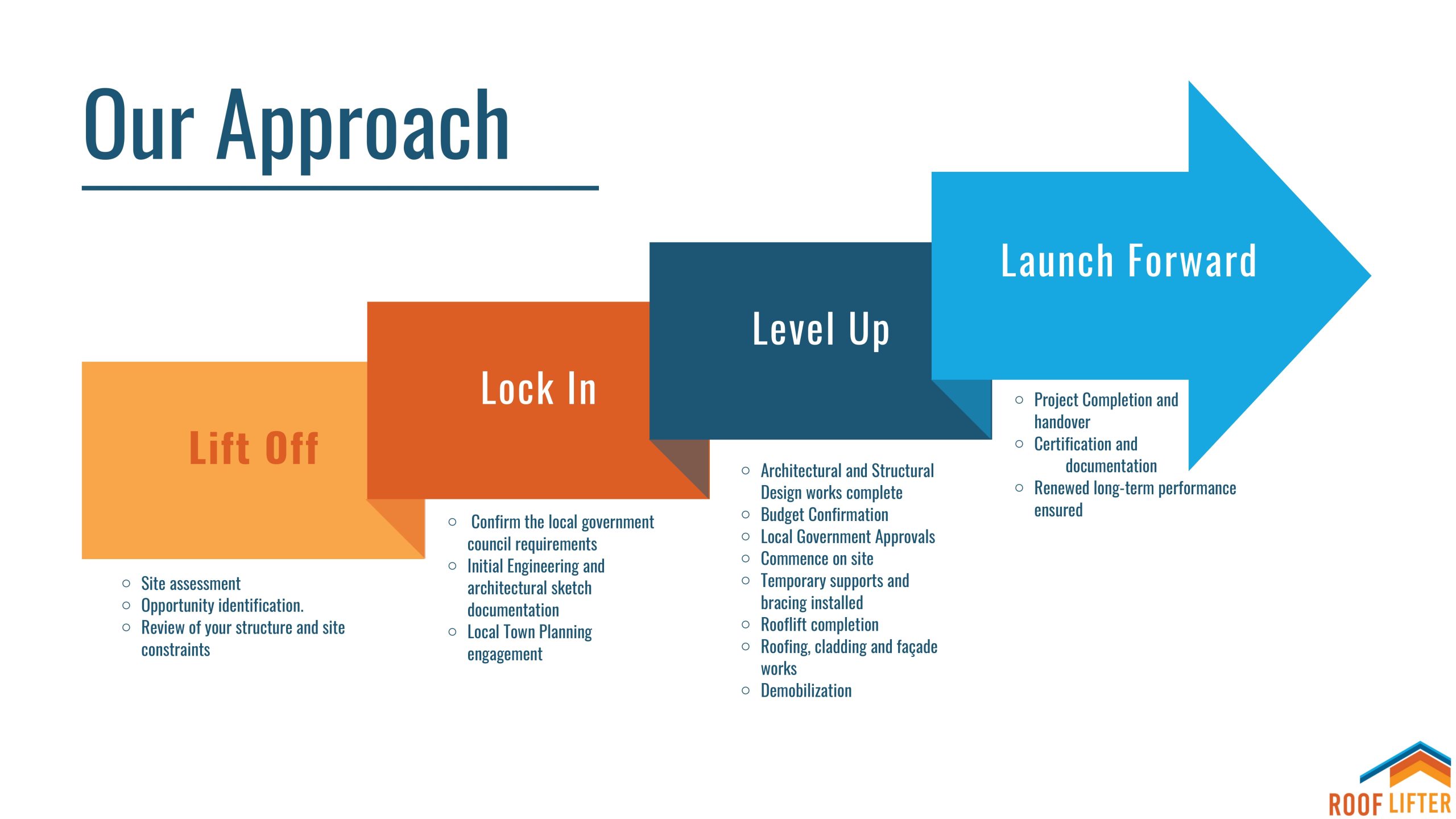
Structural Assessment and design: Engineers assess the building’s strength and ensure it can support a raised roof while meeting local building codes.
Raising the Roof: Hydraulic jacks or cranes are used to lift the roof, and columns or beams are reinforced or extended to accommodate the added height.
Creating Space: The lift increases vertical clearance, improving storage capacity or clearance for machine access. Additional features like skylights and enhanced ventilation may be incorporated.
Roof Replacement/ Reinforcement: New roofing materials, insulation, and waterproofing to improve functionality.
System Upgrades: Adjustments to HVAC, lighting, and safety systems are made to accommodate the expanded space.
Rooflifters Mission
Our mission is to deliver innovative solutions
that enhance the value and functionality of commercial and industrial properties, particularly warehouses. By strategically upgrading existing structures, we significantly increase property value and optimize space. We focus on sustainability, utilizing existing infrastructure to minimize waste and avoid the environmental impact of demolition and rebuilding. Our methods conserve land by expanding storage capacity within existing facilities, thus supporting the efficient use of developed areas in an increasingly urbanized world.
As pioneers in this niche market, we are committed to providing unique, environmentally responsible solutions and delivering 100% customer satisfaction.
Through our expertise and dedication, we aim to redefine the potential of commercial real estate while prioritizing efficiency and sustainability.
Leading the way with Innovative New Industry
Leading the Way with Innovative Solutions in the Construction Industry
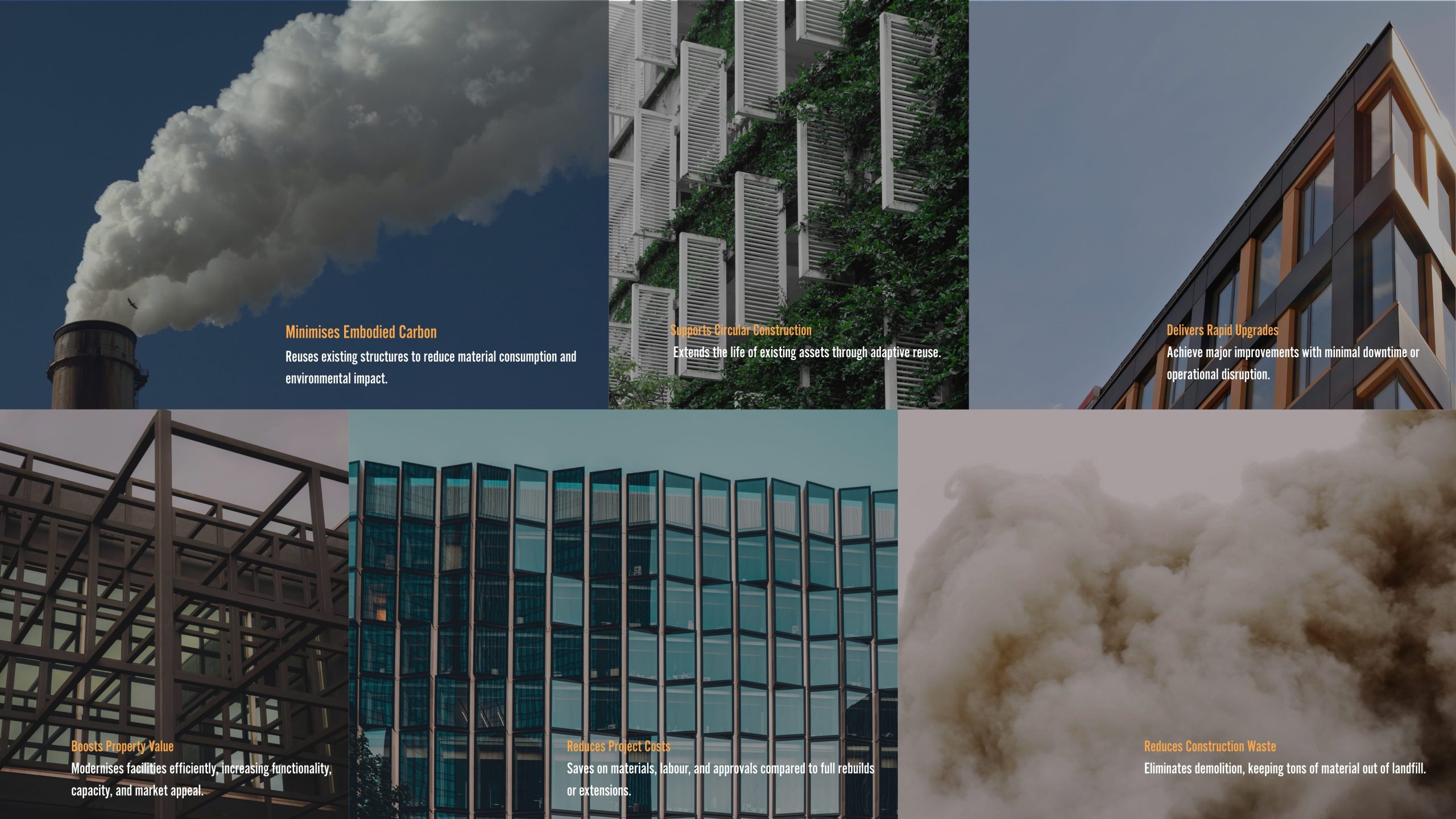
Reducing Embodied Carbon
As leaders in sustainable construction practices, our approach to reducing embodied carbon plays a crucial role in minimizing the environmental impact of our projects. By strategically reusing existing structures and materials, we significantly reduce the need for new construction materials, which are often the largest source of embodied carbon. Our process includes careful planning to maximize the potential of current buildings, selecting low-carbon materials when new ones are necessary, and implementing energy-efficient design and construction practices. Additionally, we plan for the eventual reuse or recycling of materials at the end of a building’s life cycle, ensuring long-term sustainability with minimal waste.
Leading the way with Innovative New Industry
Advantages
Increased Storage Capacity: Raising the roof allows for vertical storage, optimizing space in warehouses with limited ground area.
Cost-Effective Space Utilization: Lifting the building vertically can expand capacity without the need for costly land acquisition or new construction, particularly in urban areas.
Improved Operational Efficiency: Vertical storage solutions like automated racking, cranes, and conveyors improve inventory management and reduce operational bottlenecks.
Reduced Expansion Costs: Lifting a building is more cost-effective than horizontal expansion, especially in densely populated regions.
Increased Property Value: The added vertical capacity can enhance a property’s value and rental potential, offering more room for tenants or goods.
Sustainability: Vertical expansion reduces land development needs, minimizing the environmental impact and supporting urban sustainability.
Adaptability to Industry Trends: The demand for high-tech, automated storage solutions is increasing. Lifting a warehouse aligns with trends in industries such as e-commerce and logistics.
Considerations
Structural Integrity: Not all buildings are suited for vertical expansion. Careful assessment is needed to ensure the structure can support the added height and load.
Disruption to Operations: Lifting a warehouse may require temporary downtime, which could disrupt business operations. Planning is essential to minimize these disruptions.
Infrastructure Upgrades: Internal systems such as racking, HVAC, and lifts may need extensive
upgrades to accommodate the increased height, which can be costly and time-consuming.
Operational Complexity: Vertical storage requires advanced technologies and staff training to optimize space, which may require significant investment.
Through our innovative roof lifting solutions, we offer a sustainable, cost-effective way to expand commercial and industrial spaces without the need for full-scale demolition and rebuilding. By embracing the potential of existing structures, we help businesses increase operational capacity, enhance profitability, and reduce their environmental impact-all while adding long-term value to their properties.